
By Travis Joseph
For more than three decades, the Northern Spotted Owl has shaped forest policy across the Pacific Northwest. Following its listing under the Endangered Species Act in the 1990s, federal timber harvests fell by roughly 90 percent. Millions of acres were designated as critical habitat, and forest management across the region was fundamentally reorganized around protecting a single species.
The consequences were profound. Thousands of family-wage jobs disappeared, hundreds of mills closed, and rural communities lost billions of dollars that once supported local economies, schools, and essential public services.
Americans were told these sacrifices were necessary to save the owl. Yet after more than 30 years, the species continues to disappear.
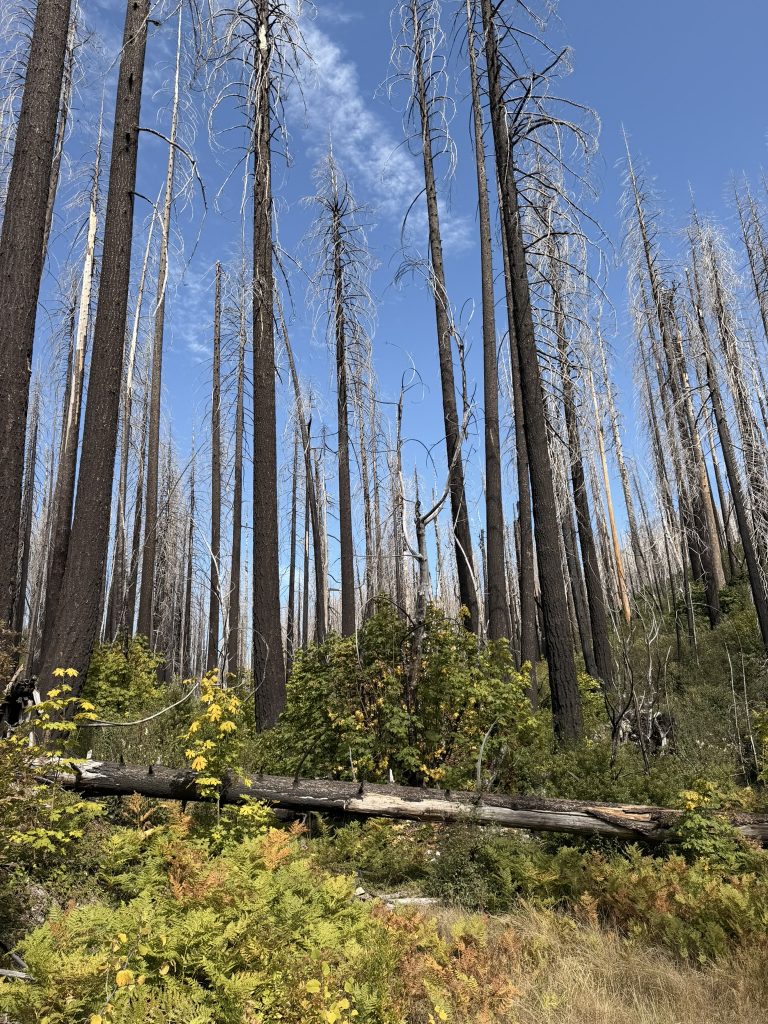
A tributary of the Little North Fork of the Feather River on the Plumas National Forest following the North Complex Fire. The area, adjacent to an inventoried roadless area, once provided habitat for the northern spotted owl. Photo: Jake Blaufuss, AFRC
A 2026 study by researchers from Oregon State University and the U.S. Forest Service found Northern Spotted Owl populations are approaching, or have already reached, functional extinction across large portions of their historic range. Researchers detected no Northern Spotted owls in parts of the Washington Cascades north of Seattle, and identified the Oregon Coast and much of Washington as areas of critical concern.
Meanwhile, researchers documented 279,439 Barred Owl detections compared to just 34,341 owl detections while analyzing more than 2.1 million hours of recordings across nearly 38,000 square miles of federally managed habitat. These findings should force a serious reassessment of federal forest policy.
The primary threat to the Northern Spotted Owl today is not a lack of protected habitat. It is competition from the Barred Owl, a larger and more adaptable species that now occupies much of the same range. Even federal wildlife officials acknowledge Barred Owl competition is the leading driver of Northern Spotted Owl declines.
That reality raises an uncomfortable question: If the principal threat to the species is Barred Owl competition, why has federal policy spent three decades focusing almost exclusively on habitat restrictions?
The latest science does not suggest that habitat is irrelevant. It is. But the record clearly shows that habitat protections alone have not halted, much less reversed, the owl’s decline.
Today, federal wildlife officials are proposing the lethal removal of more than 450,000 Barred Owls over the next 30 years in an effort to prevent the Northern Spotted Owl from disappearing altogether. Whether one supports or opposes that strategy, the proposal itself is a remarkable admission: after decades of habitat protection and land-use restrictions, policymakers are now confronting a problem those measures were never designed to solve.
The Northern Spotted Owl was never intended to become the organizing principle for managing millions of acres of public forest. Yet over time, forest policy increasingly prioritized a single species over broader ecosystem objectives.
America’s forests must provide wildlife habitat, clean water, carbon storage, recreation opportunities, wildfire resilience, sustainable wood products, and economic opportunity for rural communities. Achieving those goals requires active, science-based stewardship focused on healthy and resilient ecosystems.
The Northern Spotted Owl story should be a case study in humility. We dramatically curtailed timber harvest, designated millions of acres of critical habitat, and reorganized federal forest policy around protecting one species. Yet the latest science suggests that species is already functionally extinct across large portions of its historic range.
The question is no longer whether the Northern Spotted Owl strategy achieved its intended outcome. It did not. The question now is whether we are willing to learn from that experiment and experience.
Over the coming months, federal agencies are expected to announce significant changes to the Northwest Forest Plan and management plans for the O&C Lands in western Oregon. Those decisions will help determine whether federal land managers continue down the same path of single-species management or embrace a new approach centered on active forest management, ecological resilience, wildfire risk reduction, and healthy rural communities.
Thirty years ago, policymakers made a choice that reshaped forests and communities across the Pacific Northwest. Today, they face another choice. The lessons of the past should not be ignored. /Travis Joseph